If you're starting semaglutide or considering it for weight management, one of your first questions is probably: How long does semaglutide take to work?
You may have heard stories about people noticing appetite changes after their first injection. You may also have seen dramatic weight-loss results shared online.
Those experiences can create the impression that semaglutide should produce immediate, visible changes.
The reality is more gradual.
Semaglutide affects biological pathways involved in appetite, fullness, and blood sugar regulation. However, those effects do not translate into the same weight-loss timeline for every person.
Some people notice reduced hunger relatively early.
Others need several weeks before they recognize meaningful changes.
Visible weight reduction often develops gradually as treatment continues, the prescribed dose increases, and patients establish sustainable nutrition and activity habits.
Understanding this process can help you set realistic expectations and avoid becoming discouraged when the scale does not change immediately.
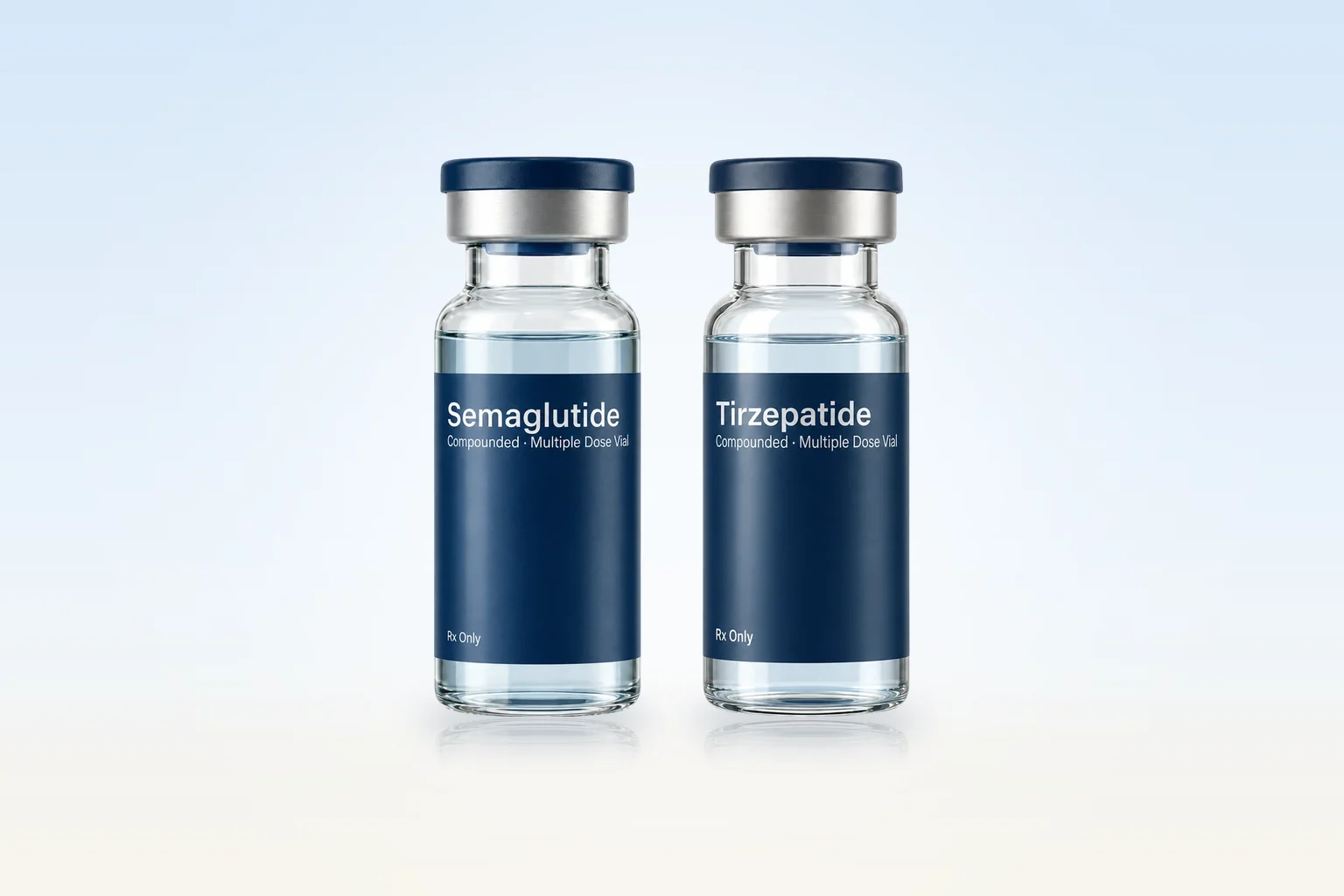
At Affinity Direct, patients can explore provider-guided weight-management options, including information about compounded semaglutide and tirzepatide, subject to clinical appropriateness and applicable legal requirements.
In this guide, we'll explain how quickly semaglutide starts working, what patients may experience during the first weeks and months, how dosing affects progress, and when to discuss your results with a healthcare provider.
How Long Does Semaglutide Take to Work for Weight Loss?
Semaglutide begins producing pharmacological effects after administration, but weight reduction typically takes longer to become noticeable.
It helps to separate three different timelines:
When the medication starts acting: Semaglutide begins entering the bloodstream after injection and starts interacting with GLP-1 receptors.
When appetite changes may become noticeable: Some patients report changes in hunger or fullness during the first several weeks, although this is not universal.
When measurable weight loss develops: Changes on the scale may appear during early treatment, but more substantial results generally accumulate over months.
These timelines are related, but they are not interchangeable.
A person may notice reduced hunger before seeing a meaningful change in body weight.
Another person may lose some weight without experiencing a dramatic reduction in appetite.
Neither experience automatically indicates that treatment is succeeding or failing.
Does semaglutide work immediately?
Semaglutide does not produce its full long-term weight-management effect immediately after the first injection.
Following subcutaneous administration, semaglutide reaches its maximum blood concentration approximately one to three days later.
Its elimination half-life is about one week, which supports once-weekly administration.
With regular weekly dosing, semaglutide concentrations generally approach steady state after approximately four to five weeks at a given dose.
However, reaching steady-state concentration is not the same as reaching maximum weight-loss benefit.
The medication is usually introduced at a low dose and increased gradually.
This means the body is adjusting to both the medication and changing exposure levels during the early months.
How quickly does semaglutide start working?
There is no single timeline that applies to everyone.
Some people notice changes in appetite during the first few weeks.
Others do not experience clear appetite changes until later in treatment.
Weight loss may begin during the initial weeks, but the amount can vary substantially.
The most useful way to assess progress is to look at patterns over time rather than expecting a particular response after one injection.
Semaglutide Weight Loss Timeline: Week by Week and Month by Month
The following timeline describes possible experiences during treatment with injectable semaglutide.
It is an educational guide, not a guaranteed schedule.
The dosing milestones reflect the established titration approach for FDA-approved injectable semaglutide used for weight management. Actual treatment plans must follow the prescribed product's current labeling and clinician instructions.
Treatment period | What may be happening | What patients may notice |
First 24–72 hours | Medication is absorbed after injection | Some notice early changes; many notice little |
Week 1 | Initial exposure to the starting dose | Possible changes in fullness or gastrointestinal symptoms |
Weeks 2–4 | Continued treatment at a low starting dose | Appetite changes may become more apparent |
Weeks 5–8 | Dose escalation may begin | Gradual changes in eating patterns or weight |
Weeks 9–12 | Further provider-guided titration | Some patients notice more consistent progress |
Months 4–6 | Continued dose adjustment or maintenance treatment | Weight-loss trends may become clearer |
Months 6–12 | Ongoing treatment and lifestyle intervention | Additional weight reduction may occur |
Beyond 12 months | Longer-term treatment and maintenance | Progress, plateaus, and maintenance needs vary |
First 24–72 Hours: What Happens After the First Injection?
After a subcutaneous injection, semaglutide is gradually absorbed into the bloodstream.
Some patients wonder whether they should feel something immediately.
Not necessarily.
You may not notice any obvious difference after the first dose.
That does not automatically mean the medication is ineffective.
Other people may notice mild nausea, early fullness, or a change in their usual appetite.
These experiences can occur, but they are not reliable measures of long-term effectiveness.
What to focus on: Follow your prescribed injection instructions, maintain hydration, and pay attention to how you feel without expecting an immediate change on the scale.
If you experience severe symptoms, contact your healthcare provider.
Week 1: Your Body Begins Adjusting
During the first week, treatment is typically at a low starting dose.
For the established FDA-approved Wegovy injection regimen, that starting dose is 0.25 mg once weekly.
This initial dose is used to begin treatment and improve tolerability during dose escalation.
It is not intended to deliver the full weight-management effect associated with later maintenance dosing.
Some patients notice that they feel full sooner during meals.
Others report that their usual appetite feels unchanged.
Both experiences are possible.
You may also experience gastrointestinal effects such as nausea, constipation, diarrhea, or abdominal discomfort.
These symptoms do not prove that the medication is working better.
A patient can experience weight loss without significant side effects.
Week 2: Appetite Changes May Become More Noticeable
By the second week, some patients begin recognizing patterns in how they eat.
For example, they may find themselves:
Feeling satisfied with smaller portions
Experiencing less frequent hunger between meals
Taking longer to finish a meal
Thinking about food less often
Feeling less interested in unusually large meals
These changes are not guaranteed.
Some people continue to feel relatively normal during the early starting-dose period.
That can be expected.
Because semaglutide treatment is designed around gradual titration, it is important not to increase the dose independently to speed up appetite suppression.
Weeks 3–4: Early Progress May Begin to Show
By the end of the first month, some patients notice measurable weight changes.
Others see little movement on the scale.
This difference can be influenced by many factors, including starting weight, calorie intake, physical activity, fluid balance, bowel habits, and individual response.
It is also possible for appetite changes to occur before substantial weight reduction.
The first month is usually too early to judge the full effectiveness of semaglutide treatment.
What to focus on: Look for trends in eating habits, hydration, tolerability, and overall progress rather than comparing your results with someone else's first-month experience.
Month 2: When Semaglutide Weight Loss May Become More Noticeable
During the second month, patients following the established approved injectable titration schedule may move from 0.25 mg to 0.5 mg once weekly, if clinically appropriate.
This is another step in the gradual dose-escalation process.
Some people notice stronger or more consistent appetite effects as treatment progresses.
Others may experience gastrointestinal symptoms around dose increases.
The provider may need to delay escalation when a patient is not tolerating the current dose.
Does semaglutide work better at higher doses?
In clinical research, weight-loss outcomes have varied by dose and treatment regimen.
However, higher doses are not automatically appropriate for every patient.
The goal is to reach an effective, tolerable, medically appropriate regimen—not to increase medication as quickly as possible.
Patients should follow the prescribed schedule and communicate any persistent side effects.
What if you haven't lost weight after one month?
A limited change after four weeks does not necessarily mean semaglutide will not work for you.
You may still be at an introductory dose.
Your provider can review adherence, eating patterns, activity, side effects, and other health factors before determining whether adjustments are appropriate.
Avoid changing the dose without guidance.
Month 3: Understanding Your Early Weight-Loss Trend
During the third month, patients following the standard approved injectable escalation schedule may reach 1 mg weekly, depending on tolerability and clinical direction.
At this stage, some people have a clearer sense of how the medication affects appetite and daily eating habits.
You may notice that meals feel more satisfying with smaller portions.
You may also have developed a more consistent routine around food choices, activity, and hydration.
How much weight should you lose after three months?
There is no single amount that every patient should lose.
Clinical trial results are averages across groups, not personal targets.
Early weight changes depend on the treatment regimen, starting weight, other health conditions, and lifestyle factors.
A provider may assess whether your progress is consistent with the expected response to the medication and whether treatment remains appropriate.
What if your progress seems slower than expected?
Slower weight reduction does not automatically mean treatment failure.
However, it is worth discussing with your provider.
Potential contributing factors include:
Remaining at an introductory dose
Missed or delayed doses
Changes in physical activity
Calorie intake that remains higher than expected
Sleep difficulties
Other medications or health conditions
Individual biological variation
Your provider can help distinguish a normal early-treatment pattern from a reason to reassess the plan.
Months 4–6: When Longer-Term Results Become Clearer
During months four through six, patients may reach or approach an appropriate maintenance regimen, depending on the product, tolerability, and clinical circumstances.
For the established injectable Wegovy escalation schedule, later steps include 1.7 mg and 2.4 mg weekly.
However, the prescribed maintenance regimen and timing should follow current product labeling and individualized medical guidance.
At this stage, weight-loss patterns may become easier to evaluate.
Some patients continue losing weight steadily.
Others experience periods when their weight changes more slowly.
Is a weight-loss plateau normal?
Yes.
Weight loss often slows over time.
As body weight decreases, energy requirements may change.
Other factors—including fluid balance, activity, sleep, and eating patterns—can also influence the scale.
A plateau does not necessarily mean the medication has stopped acting.
If weight remains unchanged for an extended period, a healthcare provider can assess whether adjustments to the broader treatment plan are appropriate.
What should you track besides body weight?
Body weight is useful, but it is not the only indicator of progress.
Depending on your health goals, your provider may also consider waist circumference, blood pressure, glucose measures, physical fitness, and overall well-being.
Changes in strength, energy, or eating patterns may be meaningful even when the scale moves slowly.
Months 6–12: What Longer-Term Semaglutide Results Can Look Like
Longer-term weight-management outcomes generally become more informative after sustained treatment.
The STEP clinical program provides important evidence about semaglutide's effectiveness over many months.
What did the STEP 1 trial show?
STEP 1 evaluated once-weekly semaglutide 2.4 mg in adults with overweight or obesity who did not have diabetes.
Participants also received lifestyle intervention.
At 68 weeks, the semaglutide group achieved approximately 14.9% average body-weight reduction, compared with approximately 2.4% in the placebo group.
These results demonstrate meaningful average weight loss in the studied population.
However, they do not mean every patient will lose 14.9% of their starting weight.
Some participants lost more.
Others lost less.
The trial also studied an FDA-approved formulation and specific treatment regimen.
Its results should not be presented as proven outcomes for compounded semaglutide.
What does 14.9% weight loss look like?
To illustrate the trial average mathematically:
Starting weight | 14.9% of starting weight |
180 pounds | Approximately 26.8 pounds |
200 pounds | Approximately 29.8 pounds |
230 pounds | Approximately 34.3 pounds |
250 pounds | Approximately 37.3 pounds |
These calculations illustrate a published trial average over 68 weeks.
They are not a prediction, treatment goal, or guarantee.
Can weight loss continue beyond six months?
Yes.
Some patients continue experiencing weight reduction during longer-term treatment.
Others may reach a plateau or begin focusing more on weight maintenance.
Treatment decisions should be guided by clinical progress, safety, and long-term health goals.
When Does Semaglutide Start Suppressing Appetite?
Some people notice appetite changes during the first few weeks of semaglutide treatment.
However, there is no universally established day when appetite suppression begins.
Semaglutide acts on GLP-1 receptors involved in appetite regulation and fullness.
Its effects on gastric emptying may also influence how full a person feels after eating.
Does semaglutide stop hunger completely?
No.
The goal is not to eliminate hunger or prevent normal eating.
Healthy appetite regulation still needs to support adequate nutrition.
Some patients experience a reduction in hunger intensity or meal size.
Others notice subtler changes.
If you become unable to eat enough food or maintain hydration, contact your healthcare provider.
Why am I still hungry after my first injection?
You may still be receiving a low starting dose.
Individual responses also vary.
Feeling hungry during early treatment does not automatically indicate that semaglutide is ineffective.
It is important to continue eating balanced meals and follow your prescribed plan.
Is appetite suppression the same as weight loss?
No.
Reduced appetite may help some patients maintain a lower calorie intake, but weight changes are influenced by many factors.
A patient can experience appetite changes without immediate weight reduction.
Similarly, someone may lose weight gradually without noticing dramatic appetite suppression.
How Semaglutide Dosing Affects the Timeline
One reason semaglutide results develop gradually is that treatment generally involves dose escalation.
Starting at a low dose helps reduce the likelihood and severity of gastrointestinal adverse effects associated with increasing medication exposure.
Standard injectable semaglutide titration
The established FDA-approved Wegovy injection schedule has commonly followed these steps:
Treatment period | Weekly dose |
Weeks 1–4 | 0.25 mg |
Weeks 5–8 | 0.5 mg |
Weeks 9–12 | 1 mg |
Weeks 13–16 | 1.7 mg |
Week 17 onward | Maintenance regimen as prescribed |
This table is an overview of the established injectable titration pathway, not individualized dosing instructions. Current approved labeling may include additional options or adjustments. A clinician determines the actual regimen.
Why not start at a higher dose?
Beginning treatment at a higher dose may increase the risk of significant gastrointestinal side effects.
The gradual approach gives the body time to adjust.
Patients should not skip titration steps or use someone else's dosing schedule.
What if you miss an injection?
Missed-dose instructions depend on the specific product and how long treatment has been interrupted.
Patients should follow their prescribed medication instructions and contact their healthcare provider when uncertain.
After a longer interruption, restarting at a previously tolerated higher dose may not always be appropriate.
How Long Does Compounded Semaglutide Take to Work?
This question is particularly relevant for patients researching treatment through telehealth providers.
Compounded semaglutide is not the same regulatory product as FDA-approved Wegovy or Ozempic.
Although compounded preparations may contain semaglutide, the FDA does not review them for safety, effectiveness, or quality before dispensing.
Does compounded semaglutide have the same weight-loss timeline?
An identical timeline has not been established.
The major clinical trials that support semaglutide's weight-management benefits evaluated specific FDA-approved products.
Those results cannot automatically be applied to every compounded formulation.
The composition, concentration, preparation, and administration instructions may differ.
Patients should not assume that a compounded vial will produce the same effects, at the same time, as a studied branded product.
Why dosing accuracy matters
Compounded semaglutide may be supplied in multidose vials.
Depending on the formulation, patients may need to measure a prescribed volume using a syringe.
Confusion between milligrams, milliliters, and syringe units can cause serious dosing errors.
The FDA has reported adverse events associated with dosing mistakes involving compounded injectable semaglutide, including some requiring hospitalization.
Patients should receive clear instructions from their prescribing clinician and dispensing pharmacy.
Never estimate a dose or copy injection-unit instructions from another person's prescription.
What about semaglutide salts?
The FDA has raised concerns about compounded products containing semaglutide sodium or semaglutide acetate.
These are different salt forms from the semaglutide base used in FDA-approved drugs.
The FDA has stated that it is not aware of a lawful basis for their use in compounding under the relevant federal conditions and does not know whether they have the same chemical and pharmacologic properties as the approved ingredient.
Patients should confirm the identity and source of any prescribed compounded product.
Is compounded semaglutide always available?
No.
The FDA has determined that the semaglutide injection shortage has been resolved.
Federal restrictions apply to compounding drugs that are essentially copies of commercially available FDA-approved medications.
Specific patient needs and applicable legal exceptions may affect whether compounding is permissible.
A prescription does not, by itself, establish that a compounded copy may lawfully be prepared.
At Affinity Direct, treatment availability should be confirmed through the licensed-provider and pharmacy process, in accordance with applicable requirements.
Why Semaglutide May Work Faster for Some People Than Others
Individual response is one of the most important factors in understanding semaglutide treatment.
Two patients can follow the same general regimen and experience different results.
Several factors may contribute.
1. Starting weight and body composition
People begin treatment at different weights and with different body compositions.
A given percentage of weight loss represents a different number of pounds depending on starting weight.
Comparing pounds lost without considering starting weight can therefore be misleading.
2. Prescribed dose and treatment stage
Someone at a maintenance dose may have a different treatment experience from someone who has just started at 0.25 mg.
Early treatment is not designed to produce the same exposure as later stages.
3. Nutrition and calorie intake
Semaglutide can influence appetite, but weight management still depends partly on energy intake and expenditure.
Highly calorie-dense foods, frequent liquid calories, and other eating patterns can affect progress.
At the same time, excessively restricting food is not a safe shortcut.
Patients need adequate nutrition throughout treatment.
4. Physical activity
Activity supports cardiovascular health, physical function, and weight management.
The appropriate amount depends on fitness level and medical circumstances.
Resistance exercise may be especially valuable for supporting muscle preservation during weight loss.
5. Sleep and stress
Sleep difficulties and chronic stress can influence eating behavior, appetite, and overall health.
Addressing these factors may help support sustainable routines.
6. Other health conditions
Diabetes, certain endocrine disorders, and other medical conditions can affect weight-management outcomes.
A provider may recommend additional evaluation when progress is unexpectedly limited.
7. Other medications
Some medications can influence body weight, appetite, or metabolism.
A comprehensive medication review may identify factors that deserve attention.
Patients should not discontinue prescribed medications solely to accelerate weight loss.
What If Semaglutide Isn't Working After Four Weeks?
Four weeks is generally too early to determine whether injectable semaglutide will produce meaningful long-term weight reduction.
At that point, many patients are still completing the initial dose stage.
The medication may be affecting biological pathways even when visible changes are limited.
Signs worth discussing with your provider
Consider contacting your provider if you have questions about persistent hunger, lack of weight change, side effects, or difficulty following the prescribed schedule.
Your clinician may review:
Whether doses were administered correctly
Whether the medication was stored properly
Your current treatment stage
Dietary patterns and physical activity
Other medications
Medical conditions affecting weight
Whether the current treatment remains appropriate
Should you increase your dose to lose weight faster?
No.
Do not increase semaglutide without prescriber guidance.
Faster escalation can increase adverse effects and may create serious safety concerns.
The appropriate treatment plan prioritizes safety and tolerability alongside effectiveness.
What If Semaglutide Isn't Working After Three Months?
By three months, a provider may have more information about your response.
However, you may still be in the dose-escalation phase.
A clinician can consider whether your progress is consistent with the treatment stage and whether other factors need attention.
When might a provider reconsider treatment?
A provider may reassess treatment when weight reduction is limited after an adequate trial at an appropriate dose, or when side effects make continued treatment difficult.
The timing and criteria depend on the medication, clinical circumstances, and applicable prescribing guidance.
A decision to continue, adjust, or change treatment should not be based solely on an arbitrary deadline.
Could tirzepatide be another option?
For some patients, a provider may discuss tirzepatide as an alternative.
Tirzepatide activates both GIP and GLP-1 receptors.
In a head-to-head trial of FDA-approved products, tirzepatide produced greater average weight reduction than semaglutide.
However, this does not mean switching is necessary or appropriate for everyone.
Semaglutide remains an important treatment option, and a patient responding well to it may have good reasons to continue.
Affinity Direct offers information about both options on its weight-loss treatment page.
For a fuller comparison, see our article “Semaglutide vs. Tirzepatide: Weight Loss, Results & Differences.”
How to Support Semaglutide Weight-Loss Results
Medication can support weight management, but everyday habits remain important.
The goal is to create a sustainable approach rather than depend entirely on appetite reduction.
Prioritize protein
Weight loss can involve reductions in both fat mass and lean tissue.
Adequate protein intake, together with appropriate resistance exercise, may help support muscle maintenance.
Protein needs vary by age, body weight, kidney health, activity level, and other factors.
A registered dietitian or healthcare provider can help establish a suitable target.
Eat balanced meals
Reduced appetite can make it tempting to skip meals or eat very little.
However, adequate nutrition remains essential.
Meals should provide appropriate protein, fiber, healthy fats, vitamins, and minerals.
Eating smaller, balanced meals may be more comfortable for some patients experiencing early fullness.
Stay hydrated
Nausea, vomiting, diarrhea, or reduced fluid intake can contribute to dehydration.
Regular hydration is important throughout treatment.
Patients who cannot keep fluids down should contact their healthcare provider.
Include regular movement
Physical activity supports cardiovascular fitness, mobility, and overall health.
Walking, swimming, cycling, and other forms of aerobic exercise may be appropriate.
Resistance training can help preserve strength during weight reduction.
Choose activities that match your health status and abilities.
Protect sleep quality
Consistent sleep supports general health and can influence appetite-related behaviors.
Improving sleep habits may make it easier to maintain a structured weight-management routine.
Track progress consistently
Daily weight fluctuations are normal.
Fluid balance, digestion, and other factors can change scale readings.
Tracking weight under reasonably consistent conditions may help reveal longer-term trends.
Avoid treating every daily increase as a setback.
For additional nutrition guidance, Affinity Direct publishes “What to Eat on GLP-1 (Semaglutide/Tirzepatide): Your First Week Guide.”
Common Semaglutide Side Effects During the First Months
The early months of semaglutide treatment can involve gastrointestinal side effects.
Commonly reported effects with FDA-approved injectable semaglutide include:
Nausea
Vomiting
Diarrhea
Constipation
Abdominal discomfort
Indigestion
Bloating
Symptoms may occur during treatment initiation or dose escalation.
Some patients experience few or no significant side effects.
Others may need additional medical guidance.
Does nausea mean semaglutide is working?
No.
Nausea is a possible adverse effect, not a measure of treatment effectiveness.
A patient can experience meaningful weight reduction without nausea.
Severe gastrointestinal symptoms should not be accepted as a necessary part of successful treatment.
What serious risks should patients know about?
Important warnings and precautions for approved semaglutide products include pancreatitis, gallbladder disease, dehydration-related kidney injury, serious gastrointestinal reactions, allergic reactions, and other product-specific risks.
Approved semaglutide weight-management products also carry a boxed warning about thyroid C-cell tumors observed in rodents.
The relevance of that finding to humans is uncertain.
Semaglutide is contraindicated in patients with a personal or family history of medullary thyroid carcinoma or multiple endocrine neoplasia syndrome type 2.
Weight-loss treatment with semaglutide should not be used during pregnancy.
A clinician should review medical history, medications, and relevant risks before treatment begins.
When should you seek medical help?
Severe or persistent abdominal pain, repeated vomiting, inability to maintain hydration, or symptoms of a serious allergic reaction require prompt medical attention.
Patients should follow their provider's instructions and seek emergency care for severe symptoms.
Can Semaglutide Stop Working Over Time?
Some patients notice that weight reduction slows after an initial period of progress.
This does not necessarily mean the medication has stopped having an effect.
Weight management involves changes in energy requirements, eating patterns, and physiology over time.
As body weight decreases, the rate of further weight reduction may slow.
Does the body become immune to semaglutide?
There is no established rule that patients inevitably become immune to semaglutide.
A plateau may reflect several factors rather than a complete loss of drug activity.
Your provider can assess whether the current regimen remains effective and appropriate.
What happens when semaglutide is stopped?
Weight regain is possible after discontinuation.
In a follow-up analysis of the STEP 1 trial, participants who stopped semaglutide regained a substantial portion of the weight they had lost during the subsequent year.
This finding highlights the chronic nature of obesity and the importance of long-term weight-management planning.
It does not mean every person will regain the same amount.
A clinician can help patients consider ongoing treatment, lifestyle support, and maintenance strategies.
How Affinity Direct Helps Patients Explore Semaglutide Treatment
Affinity Direct provides online access to medical weight-management assessments through licensed healthcare providers.
It is the online arm of Affinity Whole Health, a clinic network operating since 2012.
Its published weight-loss page lists compounded semaglutide and compounded tirzepatide, with transparent advertised pricing and provider-guided treatment decisions.
Step 1: Explore available treatment information
Patients can review medication options, dosing information, and current pricing through the Affinity Direct weight-loss page.
Affinity Direct advertises compounded semaglutide starting at an effective monthly price of $96.05 under its qualifying three-month starter plan with auto-refill.
This is a plan-specific price, not a universal monthly rate.
Prices and availability may change.
Step 2: Complete an online health assessment
Patients provide information about their medical history, current medications, and weight-management goals.
The assessment helps the reviewing provider evaluate potential contraindications and determine whether treatment may be appropriate.
Step 3: Receive licensed-provider review
Affinity Direct states that a licensed provider typically reviews the intake within 24–48 hours.
The provider may approve treatment when clinically appropriate and legally permissible, request additional information, or decline treatment.
Prescription approval is never guaranteed.
Step 4: Receive medication and instructions if prescribed
When treatment is approved and may lawfully be dispensed, medication is supplied through the applicable pharmacy process.
Affinity Direct states that injection supplies and cold shipping are included with its listed plans.
Patients should receive clear instructions about the prescribed formulation, dose, storage, administration, and potential side effects.
Step 5: Continue with provider-guided care
Semaglutide treatment is not simply a one-time injection or purchase.
Progress, tolerability, and dose adjustments may require ongoing assessment.
Affinity Direct describes ongoing care-team support for questions about side effects, dosing, and treatment plans.
It also advertises a full refund when its reviewing provider does not approve treatment, subject to current service terms.
Explore Semaglutide Treatment Options at Affinity Direct
Frequently Asked Questions About How Long Semaglutide Takes to Work
1. How long does semaglutide take to work?
Semaglutide begins acting after administration, but noticeable appetite changes may take several weeks, and meaningful weight loss generally develops over months. Individual timelines vary.
2. How long does it take for semaglutide to work for weight loss?
Some patients notice early weight changes during the first month, while others need longer. Clinical trials assess meaningful outcomes over many months rather than a few days.
3. How soon does semaglutide start working?
The medication begins entering the bloodstream after injection, with peak blood concentrations typically occurring approximately one to three days later. Noticeable effects vary.
4. How quickly does semaglutide suppress appetite?
Some people report appetite changes during the first few weeks. Others notice more gradual effects as treatment progresses.
5. Does semaglutide work after the first injection?
It begins producing pharmacological effects after administration, but a noticeable change in hunger or body weight is not guaranteed after one dose.
6. Why am I still hungry on semaglutide?
You may still be at a low starting dose, or your individual appetite response may differ. Discuss persistent concerns with your provider rather than increasing the dose independently.
7. How long does semaglutide take to kick in?
There is no single moment when its full weight-management effect begins. Blood concentrations rise after injection, while appetite and weight changes may develop gradually.
8. Can you lose weight on semaglutide in the first week?
Some patients may see early scale changes, but these are not guaranteed and may reflect factors such as fluid balance. Long-term progress is more informative.
9. How much weight can you lose in one month?
There is no reliable universal amount. Early weight changes depend on the treatment stage, starting weight, nutrition, activity, and individual response.
10. How much weight can you lose in three months?
Results vary widely. Many patients are still completing dose escalation during the first three months, so early outcomes should be reviewed in context.
11. How much weight can you lose in six months?
There is no guaranteed amount. Clinical studies demonstrate that weight reduction can accumulate over months, but individual outcomes differ.
12. How much weight can you lose in one year?
In the STEP 1 trial, participants receiving FDA-approved semaglutide 2.4 mg alongside lifestyle intervention lost approximately 14.9% of their starting body weight on average over 68 weeks. This is not a one-year guarantee or a proven outcome for compounded products.
13. Why isn't semaglutide working after four weeks?
Four weeks is often too early to evaluate the full effect because treatment usually begins at a low introductory dose.
14. Why isn't semaglutide working after three months?
Possible factors include dose, individual response, eating patterns, other medications, and health conditions. Your provider can review whether adjustments are appropriate.
15. Does semaglutide work faster at higher doses?
Dose can influence treatment effects, but increasing doses too quickly raises safety concerns. Only a licensed prescriber should direct dose changes.
16. How long does compounded semaglutide take to work?
An identical timeline to FDA-approved semaglutide has not been established for compounded preparations. Clinical trial findings should not automatically be applied to them.
17. Can semaglutide stop working?
Weight loss may plateau even while the medication continues acting. A provider can evaluate progress and determine whether the treatment plan needs reassessment.
18. Is semaglutide better than tirzepatide?
Both have meaningful clinical evidence. Tirzepatide produced greater average weight reduction in a head-to-head trial of FDA-approved products, but the best individual treatment depends on clinical circumstances.
19. Can I take semaglutide without changing my diet?
Semaglutide has been studied for weight management alongside reduced-calorie eating and increased physical activity. Sustainable nutrition and activity habits remain important.
20. How do I know whether semaglutide is right for me?
A licensed healthcare provider can assess medical history, contraindications, current medications, treatment goals, and available options before determining whether semaglutide is appropriate.
Final Thoughts: Give Semaglutide Time to Work
If you're wondering how long semaglutide takes to work, the most important thing to remember is that the medication's biological effects, appetite changes, and measurable weight loss follow different timelines.
Semaglutide begins acting after administration.
Some patients notice appetite changes within the first few weeks.
Others experience a more gradual response as treatment progresses.
Meaningful weight reduction generally develops over months, particularly as patients move through provider-guided dose escalation and maintain supportive lifestyle habits.
Clinical trials of FDA-approved semaglutide have demonstrated substantial average weight reduction, but no medication can guarantee a particular result.
The appropriate approach is to focus on safe, sustainable progress rather than expecting immediate changes.
At Affinity Direct, patients can explore information about compounded semaglutide and tirzepatide through an online assessment and licensed-provider review, subject to clinical appropriateness and applicable compounding requirements.
Whether you're beginning your weight-management journey or researching treatment options, understanding the timeline can help you make more informed decisions.
Explore Semaglutide Treatment Options at Affinity Direct
Medical disclaimer: This article is for educational purposes only and is not a substitute for individualized medical advice. Semaglutide requires appropriate medical assessment and is not suitable for everyone. FDA-approved product trial results should not be assumed to apply to compounded preparations. Do not change your medication dose or treatment schedule without guidance from your prescribing clinician.