If you're taking semaglutide, tirzepatide, or another GLP-1 medication, you may be wondering: How much protein should I eat on GLP-1?
It's an important question because these medications can significantly change your appetite and eating habits.
You may feel full after smaller meals. You may find yourself skipping snacks or eating less than usual. Some days, getting enough protein may seem surprisingly difficult.
While these changes can support weight reduction, eating too little protein may make it harder to maintain muscle and physical strength.
That's why adequate protein intake deserves attention from the beginning of treatment.
Protein provides essential amino acids that support muscle maintenance, tissue repair, immune function, and overall health.
During weight loss, it becomes particularly important because the body can lose both fat and lean tissue.
GLP-1 medications can support weight reduction, but they do not automatically preserve muscle.
Combining adequate protein with resistance exercise and balanced nutrition can help support muscle health throughout treatment.
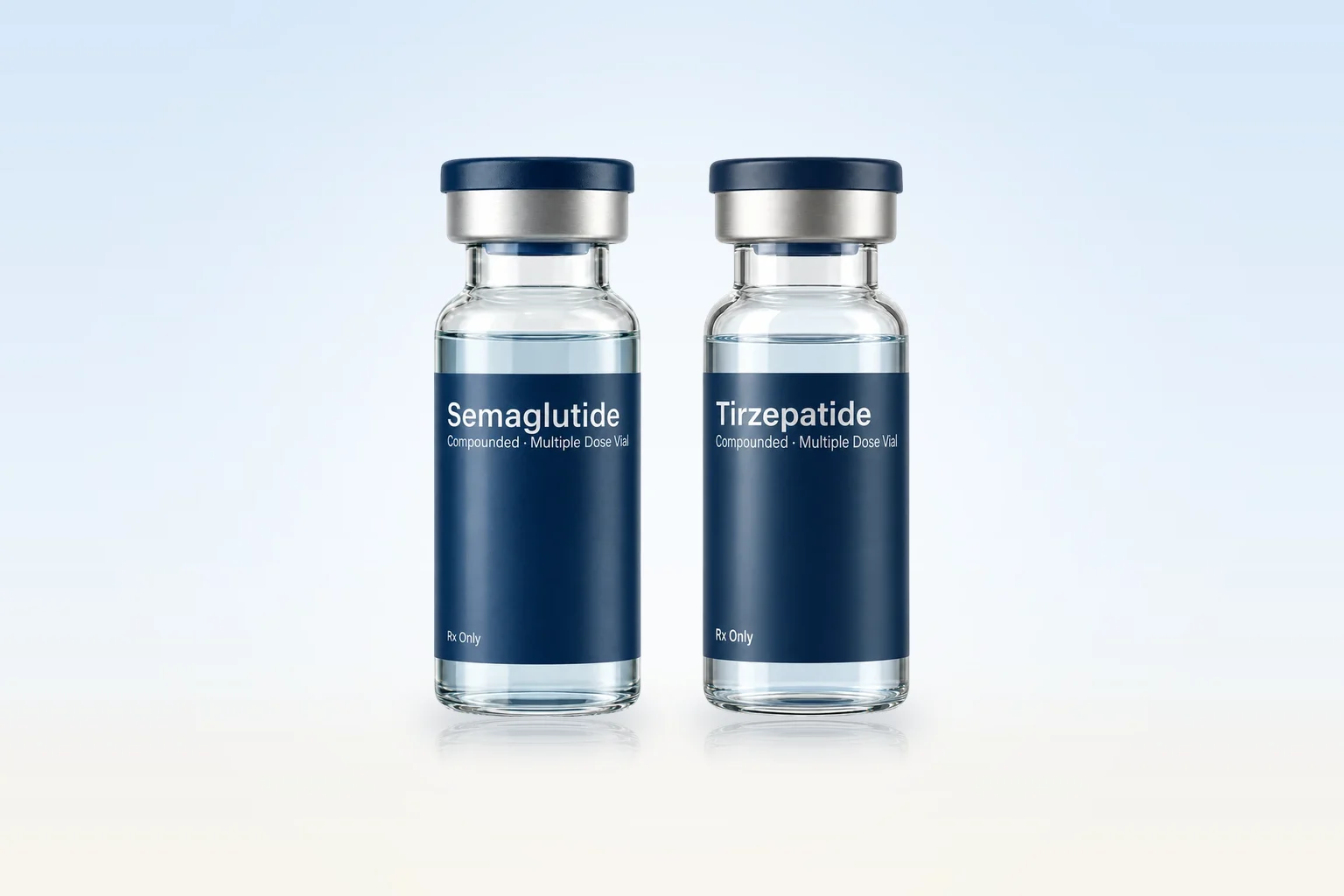
At Affinity Direct, patients can explore provider-guided weight-management options, including information about semaglutide and tirzepatide.
In this guide, we'll explain how to estimate your daily protein needs, which foods make meeting your target easier, how to distribute protein throughout the day, and what to do when reduced appetite makes eating difficult.
How Much Protein Should I Eat on GLP-1 Per Day?
For many adults taking GLP-1 medications, 80–120 grams of protein daily is a practical range to discuss with a healthcare professional.
However, this is not a universal prescription.
Protein requirements depend on several factors:
Age and body composition
Physical activity and strength training
Starting weight and rate of weight loss
Kidney function and other medical conditions
Overall calorie intake
Individual nutritional needs
A 2025 joint advisory from the American College of Lifestyle Medicine, American Society for Nutrition, Obesity Medicine Association, and The Obesity Society emphasizes individualized nutritional care during GLP-1 treatment.
The advisory discusses protein targets of approximately 1.2–1.6 grams per kilogram of body weight per day during active weight reduction, while recognizing that actual body weight may not be the most appropriate calculation basis for everyone with obesity.
How Many Grams of Protein Do You Need on GLP-1?
A daily target of approximately 100 grams may be reasonable for some adults.
For example, protein could be distributed as follows:
Meal | Protein |
Breakfast | 25 g |
Lunch | 30 g |
Dinner | 30 g |
Snack | 15 g |
Daily total | 100 g |
This is an illustration rather than an individualized meal prescription.
The goal is to consume enough protein to support your nutritional needs while maintaining a balanced diet.
Why Does Protein Matter During GLP-1 Weight Loss?
Weight reduction can involve changes in both fat mass and lean tissue.
Adequate protein intake helps support muscle maintenance, particularly when combined with resistance exercise.
Maintaining muscle and physical strength matters for mobility, metabolic health, and everyday functioning.
However, protein alone cannot guarantee that muscle will be preserved.
Appropriate activity, sufficient total calories, and overall nutritional quality remain important.
Why GLP-1 Medications Can Make Protein Intake Difficult
GLP-1 medications influence appetite and fullness through biological signaling pathways.
Semaglutide activates GLP-1 receptors.
Tirzepatide activates both GIP and GLP-1 receptors.
Both medications can influence appetite and food intake, although they are distinct treatments with different clinical evidence and prescribing considerations.
These effects may make it easier to eat smaller portions.
However, smaller portions can also mean fewer grams of protein.
You May Feel Full After a Few Bites
A meal that once felt comfortable may suddenly seem too large.
You might eat a small amount of chicken or fish and feel satisfied before finishing the serving.
If this happens repeatedly, your daily protein intake can fall below your nutritional needs.
You May Skip Meals Without Realizing It
Some patients report becoming less interested in food.
They may delay breakfast, forget lunch, or eat only a small dinner.
Even if this contributes to a calorie deficit, consistently skipping meals can make adequate protein and micronutrient intake more difficult.
Certain Foods May Become Less Appealing
Changes in food preferences can occur during treatment.
Foods that previously seemed appetizing may feel too rich, heavy, or difficult to finish.
Some patients find softer foods, soups, yogurt, or smoothies easier to tolerate.
Gastrointestinal Symptoms Can Interfere With Eating
Nausea, vomiting, constipation, and other gastrointestinal effects may occur during treatment.
These symptoms can make eating regular meals more challenging.
Persistent symptoms should be discussed with a healthcare provider rather than managed by simply eating as little as possible.
Why Protein Matters During GLP-1 Weight Loss
When someone loses weight, the reduction does not consist exclusively of body fat.
Some lean tissue may also be lost.
Lean mass includes muscle as well as other nonfat tissues.
Preserving muscle is important for physical function, mobility, strength, and overall health.
Protein Supports Muscle Maintenance
Protein provides amino acids that the body uses to build and repair tissues.
During weight reduction, adequate protein intake can help support muscle maintenance.
However, protein alone cannot guarantee that muscle will be preserved.
Resistance exercise provides an important stimulus for maintaining strength and muscle tissue.
Protein Supports Everyday Physical Function
Muscles are essential for walking, climbing stairs, carrying groceries, and maintaining balance.
Preserving strength can be especially important for older adults and people with limited physical activity.
Protein Helps Support Recovery
Physical activity places demands on muscle tissue.
Adequate protein contributes to normal repair and recovery.
This becomes relevant when patients begin resistance training as part of a weight-management program.
Protein Can Contribute to Fullness
Protein-rich foods can be satisfying.
However, patients taking appetite-suppressing medications should avoid using protein solely to maximize fullness.
The goal is adequate, balanced nutrition—not eating so little that essential nutrients are missed.
How to Calculate How Much Protein You Need on GLP-1
There are several approaches to estimating protein requirements.
No single formula is ideal for every person taking a GLP-1 medication.
Method 1: Use a Practical Daily Range
A simple approach is to discuss an 80–120 gram daily target with a healthcare professional.
This can be easier to follow than calculating protein from body weight every day.
For example, a person targeting approximately 100 grams might divide protein across meals and snacks.
Breakfast: 25 grams
Lunch: 30 grams
Dinner: 30 grams
Snack: 15 grams
Total: approximately 100 grams.
These numbers are illustrative, not a prescribed meal plan.
Method 2: Calculate Protein Using Body Weight
A commonly discussed range during active weight reduction is approximately 1.2–1.6 grams per kilogram per day.
The basic formula is:
Body weight in kilograms × protein factor = grams of protein per day
To convert pounds to kilograms:
Weight in pounds ÷ 2.205 = weight in kilograms
For example, a person weighing 150 pounds weighs approximately 68 kilograms.
Multiplying 68 by 1.2 gives approximately 82 grams.
Multiplying 68 by 1.6 gives approximately 109 grams.
That produces an illustrative range of approximately 82–109 grams per day.
Why Actual Body Weight Isn't Always the Best Calculation
For people with obesity, using current body weight can overestimate protein requirements.
Clinical experts have discussed alternatives such as adjusted body weight, reference body weight, or fat-free mass.
However, there is not yet a universal consensus on the best calculation method for every person receiving GLP-1 treatment.
This is one reason individualized nutritional guidance is valuable.
Illustrative Protein Calculations
The following table demonstrates the arithmetic behind a 1.2–1.6 g/kg calculation.
It does not establish personalized recommendations, particularly for people with obesity or medical conditions.
Body weight | Approximate kilograms | Calculated protein range |
130 lb | 59 kg | 71–94 g/day |
150 lb | 68 kg | 82–109 g/day |
170 lb | 77 kg | 92–123 g/day |
190 lb | 86 kg | 103–138 g/day |
210 lb | 95 kg | 114–152 g/day |
For patients with obesity, a clinician may use adjusted weight or another method rather than the current scale weight.
Do not assume the highest number in the table is necessary or appropriate.
Is 80–120 Grams of Protein Enough on GLP-1?
For many adults, this is a useful practical range.
But the right amount depends on individual needs.
Someone with a smaller body size and limited activity may not require the same amount as someone who performs frequent strength training.
Older adults may have additional muscle-preservation considerations.
Patients with certain medical conditions may need modified targets.
What About the Standard Protein RDA?
The traditional Recommended Dietary Allowance for protein in generally healthy adults is 0.8 grams per kilogram of body weight per day.
This is a general reference intended to meet the needs of most healthy adults.
It is not necessarily an optimal target for preserving muscle during substantial weight reduction.
Higher intake ranges have been proposed for people losing weight, particularly when combined with resistance training.
Is More Protein Always Better?
No.
Consuming increasingly large amounts does not guarantee better muscle preservation or faster weight loss.
Very high protein intake can displace other important nutrients.
It may also be inappropriate for people with certain kidney or other medical conditions.
The goal is to meet individual needs, not maximize protein at the expense of balanced eating.
How Much Protein Do You Need on Semaglutide?
Protein recommendations for patients taking semaglutide generally follow the same nutritional principles used during other medically supervised weight-loss programs.
Semaglutide can reduce appetite and food intake.
That makes adequate nutrition an important consideration.
Does Semaglutide Cause Muscle Loss?
Weight loss associated with semaglutide can include reductions in lean mass.
However, changes in lean mass should not automatically be interpreted as equivalent to loss of skeletal muscle.
Body-composition measurements can reflect changes in water and other nonfat tissues.
The important practical point is that preserving strength and muscle function deserves attention during treatment.
Should You Eat Protein Before Other Foods?
When appetite is limited, eating a protein-rich food early in the meal may help ensure you consume some protein before becoming full.
For example, you might begin lunch with chicken, fish, tofu, or beans.
Then include vegetables, whole grains, and other foods as tolerated.
This strategy should not become an excuse to eliminate other food groups.
What If Semaglutide Makes Eating Difficult?
Try smaller meals, softer protein foods, or a balanced smoothie.
If nausea or fullness prevents adequate food intake, contact your prescribing provider.
Do not reduce medication doses or change your treatment schedule independently.
For additional treatment information, visit Affinity Direct's weight-loss page.
How Much Protein Do You Need on Tirzepatide?
Tirzepatide also requires attention to adequate protein and overall nutrition.
Because it affects appetite and fullness, some patients may find that their usual meal patterns change substantially.
Is the Protein Target Different From Semaglutide?
There is no established universal rule requiring a different protein target solely because someone takes tirzepatide instead of semaglutide.
Protein needs are better determined by individual nutritional and medical factors.
These include body composition, activity, age, weight-loss rate, and relevant health conditions.
What If You Feel Full Very Quickly?
Smaller, more frequent meals may be easier than attempting three large meals.
Protein-rich snacks can help distribute intake across the day.
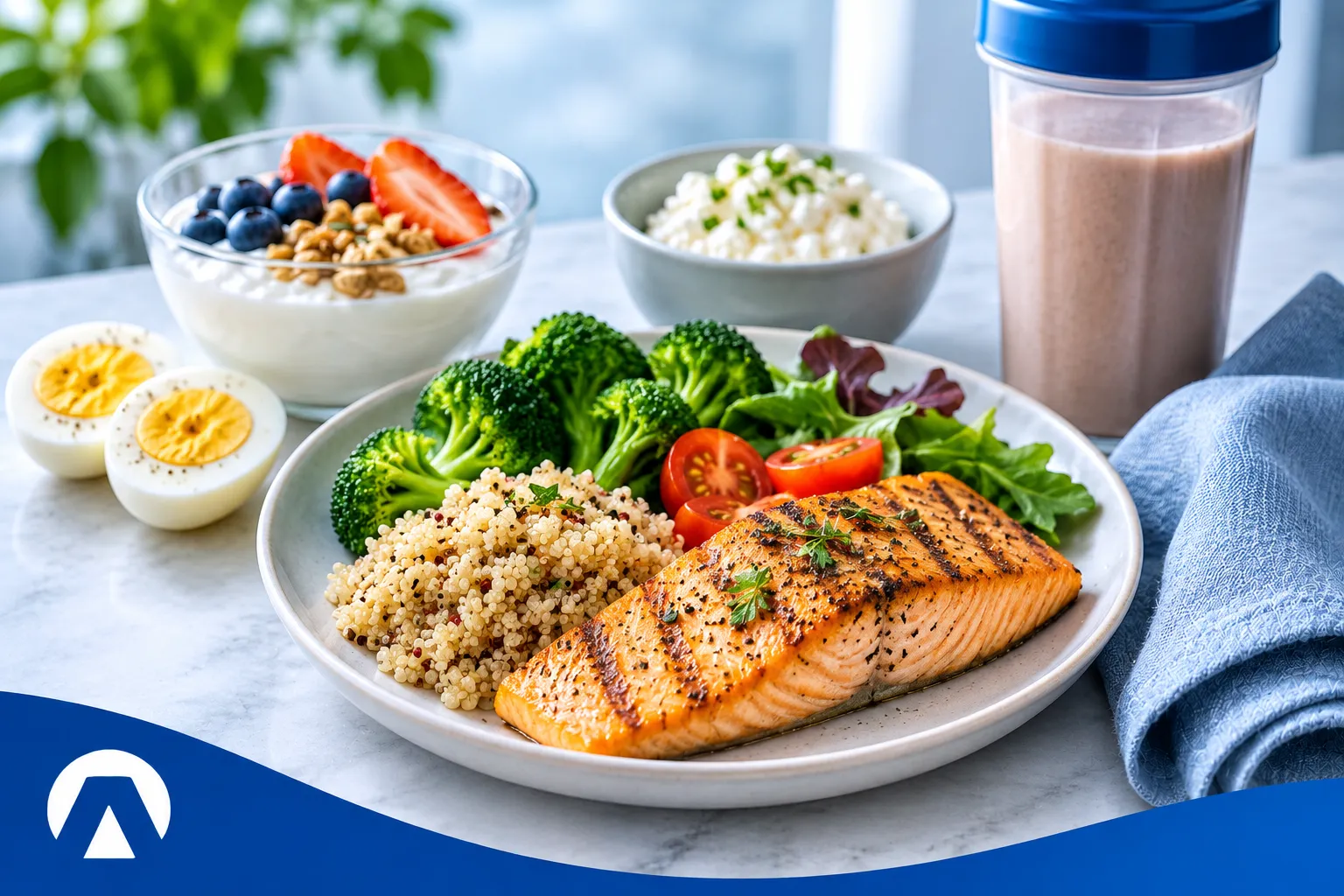
Examples include Greek yogurt, cottage cheese, eggs, tofu, or a protein drink.
Can You Build Muscle While Taking Tirzepatide?
Some patients may improve strength and muscle fitness while taking tirzepatide, especially when participating in an appropriate resistance-training program.
However, gaining substantial muscle during a calorie deficit may be challenging.
The more practical goal for many patients is to preserve strength and as much muscle as possible while reducing excess body fat.
For medication-specific information, visit Affinity Direct's tirzepatide treatment page.
Best Protein Foods to Eat While Taking GLP-1
When appetite is reduced, choosing nutrient-dense protein sources can make meeting daily needs easier.
The best choices are foods you can tolerate, enjoy, and include consistently.
Animal-Based Protein Sources
Food | Typical serving | Approximate protein |
Chicken breast, cooked | 3 oz | 26 g |
Salmon, cooked | 3 oz | 22 g |
Tuna, canned | 3 oz | 20 g |
Eggs | 2 large | 12–13 g |
Plain Greek yogurt | ¾ cup | 15–18 g |
Cottage cheese | ½ cup | 12–14 g |
Milk | 1 cup | 8 g |
Turkey breast, cooked | 3 oz | 24–26 g |
Values vary by brand, preparation, and serving size.
Plant-Based Protein Sources
Food | Typical serving | Approximate protein |
Firm tofu | ½ cup | 10–20 g |
Tempeh | 3 oz | 15–18 g |
Lentils, cooked | 1 cup | 18 g |
Chickpeas, cooked | 1 cup | 14–15 g |
Edamame, cooked | ½ cup | 9 g |
Black beans, cooked | 1 cup | 15 g |
Soy milk | 1 cup | 7–9 g |
Pumpkin seeds | 1 oz | 8–9 g |
Plant foods also contribute fiber and other nutrients.
A varied plant-based diet can provide adequate protein when planned appropriately.
What Are the Easiest Proteins to Eat With Low Appetite?
Some patients prefer foods that require less chewing or have a softer texture.
Useful options may include Greek yogurt, scrambled eggs, cottage cheese, tofu, lentil soup, soft fish, and smoothies.
Choose foods based on your preferences and tolerance.
How to Get 100 Grams of Protein on GLP-1
Reaching 100 grams may sound difficult when your appetite is smaller.
However, distributing protein across the day can make the target more manageable.
Here is one illustrative meal pattern.
Meal | Example | Approximate protein |
Breakfast | Greek yogurt with berries and seeds | 23 g |
Lunch | Chicken and vegetable bowl | 30 g |
Snack | Protein-rich yogurt or shake | 20 g |
Dinner | Salmon with vegetables and quinoa | 28 g |
Total | 101 g |
Actual amounts depend on portions and product labels.
This example is not a complete nutritional prescription.
Individual calorie needs, allergies, medical conditions, and food preferences should guide meal planning.
Can You Get Enough Protein Without Large Meals?
Often, yes.
Smaller meals and snacks can distribute protein intake across the day.
You do not need to consume all your protein in one sitting.
For example, three moderate meals and one protein-rich snack may feel more comfortable than two very large meals.
Should Every Meal Contain Protein?
Including some protein at each meal is a useful strategy for many people.
It can help make daily intake more consistent.
However, the precise distribution should fit your schedule, appetite, and nutritional needs.
Sample GLP-1 Meal Plan: High Protein, Smaller Portions
The following one-day example emphasizes moderate portions and varied foods.
Breakfast
Plain Greek yogurt with berries and a small serving of nuts or seeds.
This provides protein along with fiber, vitamins, and healthy fats.
If yogurt is not appealing, scrambled eggs with whole-grain toast may be an alternative.
Midmorning Snack
A small protein-rich drink or cottage cheese with fruit.
This can be useful if you have difficulty finishing a larger breakfast.
Lunch
A modest portion of grilled chicken, tofu, or fish with vegetables and a whole grain.
Eat slowly and stop when comfortably satisfied.
Avoid forcing yourself to finish a large portion if you feel unwell.
Afternoon Snack
Edamame, yogurt, or a small smoothie.
Choose a snack that contributes meaningful nutrition rather than relying only on low-nutrient snack foods.
Dinner
Salmon, beans, or lean poultry with cooked vegetables and a suitable portion of rice, potatoes, or another carbohydrate source.
A balanced dinner should support your overall nutritional needs.
What If You Can't Finish the Meals?
You may need smaller portions, different textures, or a different meal schedule.
Persistent inability to eat enough requires medical or dietitian guidance.
The objective is not to force a fixed meal plan regardless of symptoms.
Protein Shakes on GLP-1: Are They Helpful?
Protein shakes can be convenient when solid food feels difficult to eat.
They may help patients meet protein needs without requiring a large meal.
However, they are not mandatory.
Many people can obtain adequate protein through regular foods.
When Might a Protein Shake Be Useful?
A shake may be helpful when you have limited appetite, need a convenient snack, or find certain solid foods difficult to tolerate.
Some patients also use shakes after physical activity.
What Should You Look for in a Protein Shake?
Consider the amount of protein per serving, total calories, added sugar, ingredients, and whether the product fits your dietary needs.
People with food allergies should check labels carefully.
Those with kidney disease or other medical conditions should discuss supplements with their healthcare provider.
Can a Protein Shake Replace a Meal?
Occasionally, a nutritionally complete meal-replacement product may be appropriate.
But a basic protein shake does not necessarily provide enough fiber, vitamins, minerals, essential fats, or total energy to replace a balanced meal.
Relying on shakes for most of your nutrition may create deficiencies.
Are Whey and Plant Protein Equally Useful?
Both can contribute to daily protein intake.
Whey is a complete protein derived from milk.
Soy protein is also a complete protein.
Other plant-based products may combine different protein sources.
The best option depends on dietary preferences, allergies, tolerance, and overall nutrition.
How to Prevent Muscle Loss While Taking GLP-1 Medication
Adequate protein is important, but it is not the only strategy for protecting muscle.
A comprehensive plan should include resistance training and appropriate nutrition.
1. Include Strength Training
Resistance exercise provides a stimulus that helps maintain muscle strength and function.
Examples include resistance bands, bodyweight exercises, free weights, or gym machines.
The right program depends on fitness level and medical circumstances.
2. Avoid Extreme Calorie Restriction
GLP-1 medications may reduce appetite substantially.
However, eating far too little can make it difficult to meet protein and micronutrient needs.
Severe restriction may also worsen fatigue and compromise physical function.
A healthcare professional can help establish an appropriate calorie intake.
3. Spread Protein Across the Day
Consistent protein intake can be easier when meals and snacks include protein sources.
This may also be more comfortable for people experiencing early fullness.
4. Monitor Strength and Function
Weight is only one measure of progress.
Changes in walking ability, grip strength, resistance-training performance, and everyday physical function can also be informative.
A clinician may recommend body-composition assessment when appropriate.
5. Include Aerobic Activity
Walking, cycling, swimming, and other aerobic activities support cardiovascular health.
However, aerobic activity alone is not a substitute for resistance exercise when muscle preservation is a major goal.
6. Seek Professional Guidance When Needed
Older adults, people with limited mobility, and those with chronic health conditions may benefit from individualized exercise and nutrition planning.
A registered dietitian, physical therapist, or qualified exercise professional can help.
How Often Should You Strength Train on GLP-1?
Many general physical-activity guidelines encourage muscle-strengthening activities on at least two days per week.
However, the appropriate frequency and intensity depend on individual ability.
Someone who is new to exercise may begin with simple movements and gradually progress.
An experienced exerciser may follow a more structured program.
What Counts as Resistance Exercise?
Resistance exercise includes activities that challenge muscles against a load.
Examples include squats, wall push-ups, resistance-band rows, seated leg extensions, and weightlifting.
Do You Need a Gym Membership?
No.
Bodyweight exercises and resistance bands can provide useful options at home.
The most important factors are safety, consistency, and appropriate progression.
What If You Feel Weak or Dizzy?
Stop the activity and seek medical advice if symptoms are concerning.
Weakness, dizziness, or unusual fatigue may reflect inadequate food intake, dehydration, medication effects, or another health issue.
Do not push through severe symptoms.
How to Get Enough Protein on GLP-1 With Low Appetite
Reduced appetite can make even a reasonable protein target feel challenging.
The solution is not necessarily to force larger meals.
Instead, consider practical adjustments.
Choose Smaller Portions More Frequently
Some patients tolerate several smaller eating occasions better than large meals.
A small serving of yogurt, an egg, or a portion of tofu can contribute protein without requiring a large plate of food.
Try Softer Textures
Scrambled eggs, yogurt, cottage cheese, soups, and smoothies may be easier to eat when appetite is limited.
Avoid Very Large, High-Fat Meals if They Worsen Symptoms
Some people experience more discomfort after large or rich meals.
Smaller portions and lower-fat preparations may be better tolerated.
Use Reminders When Appropriate
If reduced hunger causes you to forget meals, a simple reminder may help you maintain a regular eating pattern.
Discuss Persistent Nausea With Your Provider
Nausea that repeatedly prevents adequate eating deserves clinical attention.
Your provider may evaluate the dose, treatment schedule, hydration, and other possible causes.
Protein and Other Nutrients: Don't Forget the Bigger Picture
Protein is important, but it is not the only nutrient your body needs.
A diet built almost entirely around protein shakes or lean meat may lack essential fiber, vitamins, minerals, and healthy fats.
Fiber Supports Digestive Health
Vegetables, fruits, beans, lentils, and whole grains contribute fiber.
Fiber can support bowel regularity, which may be relevant for patients experiencing constipation.
Increase fiber gradually when appropriate and maintain adequate hydration.
Healthy Fats Remain Important
Nuts, seeds, olive oil, avocado, and fatty fish provide beneficial fats.
However, very large high-fat meals may be uncomfortable for some patients taking GLP-1 medications.
Carbohydrates Still Have a Role
Whole grains, fruits, vegetables, beans, and other carbohydrate-containing foods can contribute energy, fiber, and micronutrients.
Patients generally do not need to eliminate carbohydrates simply because they are taking a GLP-1 medication.
Hydration Matters
Reduced food intake and gastrointestinal symptoms can increase the risk of inadequate fluid intake.
Hydration needs vary with body size, activity, climate, and medical conditions.
People with heart failure, kidney disease, or other conditions affecting fluid balance may require individualized guidance.
Common Protein Mistakes During GLP-1 Weight Loss
Even patients who understand the importance of protein can encounter challenges.
Mistake 1: Eating Almost Nothing Because You Aren't Hungry
Reduced hunger does not eliminate nutritional requirements.
Consistently eating too little can increase the risk of inadequate protein and micronutrient intake.
Mistake 2: Assuming More Protein Guarantees Faster Weight Loss
Protein supports nutrition and muscle maintenance.
It does not replace the need for a balanced diet, appropriate calorie intake, and physical activity.
Mistake 3: Ignoring Strength Training
Protein alone may not be enough to preserve muscle during substantial weight reduction.
Resistance exercise is an important part of the overall plan.
Mistake 4: Using Only Protein Shakes
Shakes can be useful, but relying on them excessively may crowd out foods that provide fiber and other nutrients.
Mistake 5: Following Someone Else's Protein Target
A target that works for a highly active adult may be inappropriate for someone with kidney disease or different nutritional needs.
Mistake 6: Focusing Only on the Scale
Weight reduction is not the only measure of progress.
Strength, mobility, energy, and overall health matter too.
Mistake 7: Ignoring Persistent Gastrointestinal Symptoms
If nausea, vomiting, or early fullness makes it difficult to eat adequately, contact your healthcare provider.
Do Older Adults Need More Protein on GLP-1?
Older adults may have additional concerns about preserving muscle and physical function during weight loss.
Age-related muscle loss can affect strength, mobility, and independence.
For this reason, protein intake and resistance exercise may deserve particular attention.
However, the appropriate protein target depends on kidney function, medical history, nutritional status, and other factors.
Older adults should avoid adopting high-protein targets without considering their overall health.
A registered dietitian or healthcare provider can help develop a suitable plan.
What About Protein Intake With Kidney Disease?
People with chronic kidney disease may require individualized protein recommendations.
The appropriate amount depends on kidney function, disease stage, dialysis status, and other medical factors.
A high-protein weight-loss plan may not be suitable for everyone with kidney disease.
Patients should not assume that general GLP-1 protein recommendations apply to their situation.
If you have kidney disease, consult your treating clinician or renal dietitian before significantly changing protein intake.
How Affinity Direct Supports Provider-Guided Weight Management
Affinity Direct offers online access to information about weight-management treatment options through its licensed-provider network.
Patients can explore semaglutide and tirzepatide options, complete an online health intake, and receive a clinical review.
Treatment decisions depend on medical appropriateness and applicable prescribing and dispensing requirements.
Explore Treatment Options
The Affinity Direct weight-loss page provides information about available programs, pricing, and the assessment process.
Patients interested specifically in tirzepatide can review the dedicated tirzepatide page.
Complete a Health Assessment
The online intake collects relevant medical information.
A licensed provider evaluates whether treatment may be appropriate.
Receive a Treatment Decision
The provider may approve treatment, request additional information, or decline prescribing.
Approval is not guaranteed.
Continue Focusing on Nutrition and Healthy Habits
Medication does not replace the need for adequate nutrition.
Patients should discuss significant appetite changes, difficulty eating, persistent side effects, and concerns about muscle loss with their healthcare team.
Understand Compounded Medication Limitations
Affinity Direct's published treatment pages describe compounded semaglutide and tirzepatide.
These compounded products are not FDA-approved.
The FDA does not evaluate compounded medications for safety, effectiveness, or quality before dispensing.
Compounding is subject to federal and state restrictions, including rules affecting copies of commercially available FDA-approved drugs.
Availability should not be assumed, and clinical trial results for approved products cannot automatically be applied to compounded formulations.
Explore Weight-Loss Treatment Options at Affinity Direct
Frequently Asked Questions About GLP-1 and Protein
1. How much protein should I eat on GLP-1?
Many adults may benefit from discussing a target of approximately 80–120 grams per day with a healthcare professional. Individual needs vary.
2. How much protein do I need on GLP-1?
Your needs depend on body composition, age, activity, medical history, and other factors. Some clinical guidance discusses approximately 1.2–1.6 grams per kilogram daily during active weight reduction, with individualized calculation methods.
3. How much protein should I eat on semaglutide?
Protein needs depend on individual nutritional factors rather than the medication alone. A registered dietitian can help determine an appropriate target.
4. How much protein should I eat on tirzepatide?
The same individualized principles apply. There is no universal protein requirement specific to tirzepatide.
5. Is 100 grams of protein enough on GLP-1?
It may be appropriate for some adults, but others may need a different amount.
6. Is 60 grams of protein enough on GLP-1?
It depends on the person. Sixty grams may be insufficient for some adults undergoing substantial weight reduction, particularly when muscle preservation is a concern.
7. Do GLP-1 medications cause muscle loss?
Weight loss during GLP-1 treatment can include reductions in lean tissue. Adequate protein and resistance exercise may help support muscle preservation.
8. Can protein prevent all muscle loss?
No. Protein alone cannot guarantee muscle preservation. Resistance exercise and adequate overall nutrition are also important.
9. Should I eat protein first on GLP-1?
Eating protein-rich foods early in a meal can be helpful when you become full quickly, but balanced nutrition remains essential.
10. Can I drink protein shakes while taking semaglutide?
Protein shakes may be useful when solid foods are difficult to eat. Choose products appropriate for your dietary needs and medical circumstances.
11. Can I drink protein shakes while taking tirzepatide?
Yes, protein drinks can be a practical nutritional option for some patients. They should complement a balanced diet rather than automatically replace meals.
12. What are the best protein foods on GLP-1?
Examples include Greek yogurt, eggs, fish, chicken, tofu, cottage cheese, beans, lentils, and edamame.
13. What if I'm too nauseated to eat protein?
Try discussing smaller meals and easier-to-tolerate foods with your healthcare provider. Persistent nausea or inability to maintain adequate intake requires medical assessment.
14. Should I eat more protein on injection day?
There is no universal requirement to increase protein specifically on injection day. Consistent intake across the week is generally more useful.
15. Is whey protein good for GLP-1 patients?
Whey can be a convenient protein source for people who tolerate dairy. It is not necessary if adequate protein can be obtained from other foods.
16. Can vegetarians get enough protein on GLP-1?
Yes. Tofu, tempeh, lentils, beans, soy milk, edamame, nuts, and seeds can contribute to adequate intake.
17. Can I build muscle while losing weight on GLP-1?
Improving strength and maintaining muscle are realistic goals for many patients. The extent of muscle gain depends on training, nutrition, health, and the size of the calorie deficit.
18. Do I need to lift weights on GLP-1?
Resistance exercise is strongly encouraged when medically appropriate because it supports muscle strength and preservation during weight loss.
19. Is too much protein bad on GLP-1?
Excessively high intake may be unnecessary and inappropriate for some people, particularly those with certain medical conditions.
20. How do I know if I'm eating enough protein?
A food diary, nutrition app, or dietitian assessment can help estimate intake. Your healthcare provider may also consider strength, dietary quality, weight trends, and nutritional status.
Final Thoughts: Protein Is an Important Part of GLP-1 Weight Loss
If you're taking semaglutide or tirzepatide, protein deserves a place in your weight-management plan.
GLP-1 medications can make eating less feel easier, but eating less should not mean neglecting essential nutrition.
Adequate protein helps support muscle maintenance and physical function during weight reduction.
For many adults, a daily target around 80–120 grams may be a useful starting point for discussion.
However, there is no single number that works for everyone.
The most effective approach combines individualized protein intake, balanced meals, appropriate resistance exercise, adequate hydration, and provider-guided care.
Rather than focusing only on how quickly the scale changes, consider how your treatment supports your long-term health, strength, and daily functioning.
At Affinity Direct, patients can explore information about semaglutide and tirzepatide through an online assessment and licensed-provider review, subject to clinical appropriateness and applicable requirements.